

Featured Podcast: https://www.youtube.com/watch?v=ycPr5-27vSI&t
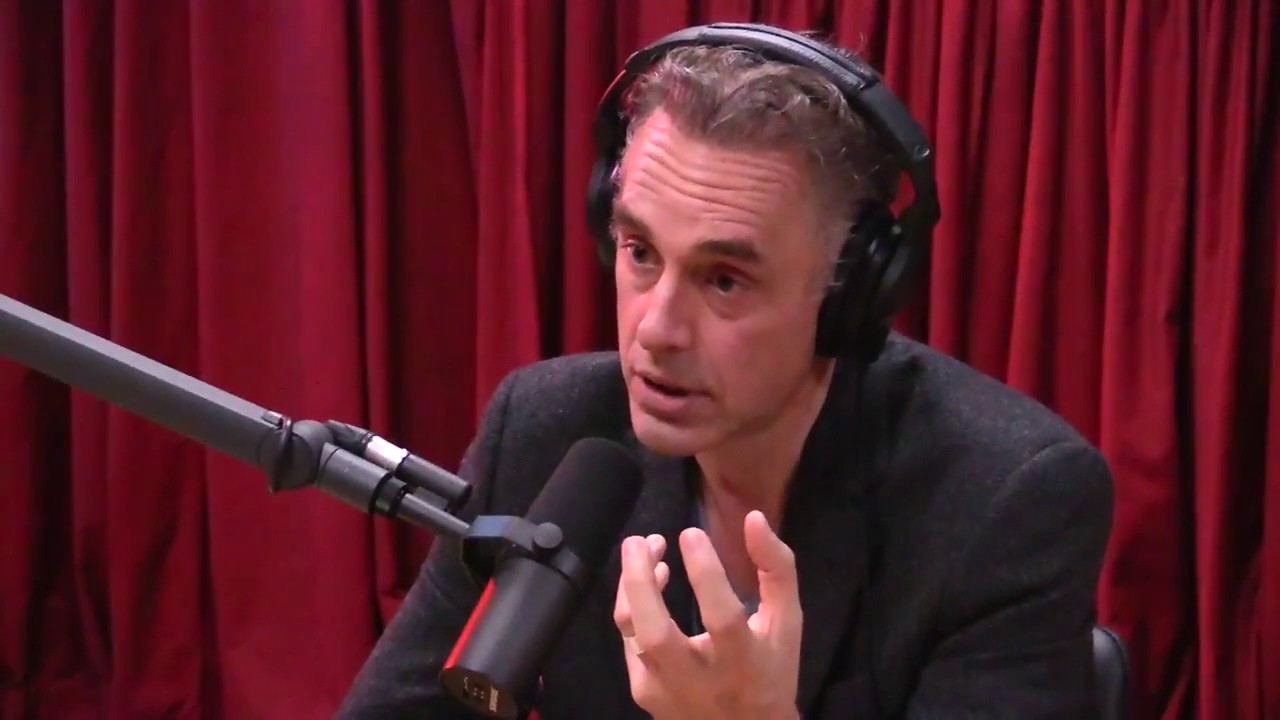
At the time of the podcast Jordan Peterson was a clinical psychologist and tenured professor of psychology at the University of Toronto.
In this blog I will be extracting some of the key points Peterson puts forward and expanding/reflecting on them.

The war of ideas & tribal people.
In this day and age people are increasingly turning away from rationale conversation and resorting to extreme measures of violence. None of these protesters would sit down and discuss their opposing views with Peterson but instead resort to trying to suppress him. What brings people to act in this way? It isn’t so simple but I think we need to keep an eye on this behavior and promote debate and conversation between opposing forces over the type of behavior shown at Peterson’s public talks.
Peterson points out that we are living in a war of ideas at the moment, as an example of the lengths people go to win their battles in this war he pointed out how he was called racist just because he criticized someone who happened to be black. As humans we have gone through hundreds of thousands of years of evolution but only recently have we evolved out of tribal societies, it is widely considered that we are still neurologically ‘tuned’ for these tribal settings which lead to people taking sides with their ‘tribe’ and seeing those outside their tribe as enemies or ‘predators’, this highly appeals to our instincts that protected us during tribal ages. This type of thinking would have been very beneficial in tribal society in early times as the tribes who don’t trust other tribes would likely have a higher survival rate in the short term, but it is a certain number of tribes that went outside this genetic preference and started trusting one another who got us to where we are today.
It would appear that this tribal mentality is likely to be bred out of our genetics eventually as long as we remain a worldwide society. This will likely take thousands of years at the least, so for now it seems important for those of us who are aware of this to promote the act of listening and talking to people we don’t disagree with. He also put forward that most socially anxious people are scarred of being placed outside their ‘tribe’, this leads to a fear of engaging in social interaction due to the possibility of being rejecting by the people they want to be among.
Peterson pointed out an extreme example of this ‘tribalism’ in the rise of Hitler. During Hitlers rise he was known as an orderly person, very clean. He started with campaigns that cleaned up factories, and other pests on society then went on to considering mentally ill people in this group of people outside his ‘tribe’ therefor he thought of them as potential snakes in the grass and thought himself morally righteous for cleansing this threat. What Hitler went on to do is the most extreme example of tribalism we know of in recent history, this is where the path leads if we decide to become people who dismiss alternative opinions without conversation and resort to violence instead.
Clean your room.
During the podcast at some stage Jordan Peterson repeats his famous phrase ‘clean your room’, Joe asks him to expand on this so Peterson in short, explained that if someone want’s to make a change in the world they first need to look inward, this is common knowledge to most people but is sometimes lost when people meet conflict in the ideological space. If you can’t keep your own room clean, literally or metaphorically then what right do you have to go out into the world and discern how others should live.
Peterson put forward another interesting idea related to this topic: The world presents itself as a collection of puzzles, some you can solve and some you can not, but there is some that you know you can solve but choose not to, even though you may find yourself thinking “I should really do this” you still, do not. What would the world be like if we all did these things without fear or hesitation? How much potential exists in a group of people but is not used? The individual is salvation.
Carl Yung said that in order for a human to head towards completion they need to discover their ‘shadow’ and bring it under their control. In basic terms the shadow is the part of our personality that we reject and push into the back of our mind, we don’t allow it to manifest itself in our persona, it represents our capacity for evil. Yung believes that we need to realize this part of ourselves and bring it under our control in order to approach a state of enlightenment.
Peterson points out that someone who is young, naive and not capable of evil is not capable of choosing to be morale. One has to wield power and have the capability to use it for evil things but choose not to in order to be a moral person. Peterson points out how Joe Rogan is quite an obvious example of this and it’s likely why a lot of people are attracted to him, he’s built well, capable of fighting but uses his time and abilities in positive ways. “You’re a tough dude out here trying to figure things out, people like that.”
Finding meaning.
Joe asked Peterson at one stage “Why do you think it’s mainly males resonating with your ideas?” in comedic fashion he replied with “Well maybe females already have enough to do” although there may be some truth to this.
Lots of young men feel somewhat lost in todays world, some retreat to dark rooms and live out fantasies in video games in attempt to satiate what appears to be some genetic predisposition to live out a ‘hero’ story in their lives. Others find this aspect satisfied in sports, hobbies or their careers, but some of us are lost to virtual worlds.
Peterson points out that when people say their life is meaningless what they actually mean most of the time is that they are anxious and in pain most of the time. This might sound extreme but when someone says their life is meaningless does that mean they sit around feeling neutral? This simply does not happen.
Joe points out that many people feel devoid of meaning due to the predefined routes life already has laid out for us these days. People can feel alienated by the society they are embedded in. Peterson thinks the best path out of this way of life is to start telling the truth at all times, especially to yourself. The truth is like a weapon that sheds deadwood, it is unforgiving. The smarter a kid is the earlier they will learn to lie because it allows you to manipulate the world but if you find yourself lying all the time you will end up not being able to trust yourself. If you spend your time consistently lying there will comes times when you need to make a choice but you don’t have the clarity of mind or experience to chose correctly because your perception and imagination is filled with lies. You would lack the clarity of mind that comes from being truthful and witnessing the outcome of it.
Another action recommended by Peterson is to take on burdens, he thinks we are similar to pack animals in that we are only comfortable when we have a good amount of weight on our backs, could the lack of problems be contributing to our problems today (haha). Is our lack of burdens leaving us in a state of ‘missing something’?
As a closing point it should be noted that Peterson is a Christian, to some degree. He is scientific but thinks there is a great deal of wisdom to learn from the bible and that it isn’t just about believing there is a man in the sky. When thought about from this perspective it is easier to understand Christians as people who subscribe to a book that has been developed over thousands of years to guide someone in how they should act in their life. Most Christians are pretty well put together people after all. Maybe the bible needs re-branding into something more suitable for the modern generations in order for the wisdom to be passed around more readily? Just an idea, I am not Christian myself.
Thank you for reading.
jordanbpeterson.com/
twitter.com/jordanbpeterson
en.wikipedia.org/wiki/Jordan_Peterson
youtube.com/channel/UCL_f53ZEJxp8TtlOkHwMV9Q
 JRE Top Picks